
System Description
Zenesis House maintains a year-round indoor temperature of 68-72 degrees F, relative humidity around 50%, and CO2 PPM around 550. In a climate we’ve seen get as cold as – 20 in the Winter, and as warm as 110 in the Summer (with high humidity) no single piece of equipment can manage these loads at peak efficiency all year long.
Therefore, we designed multiple overlapping systems custom-tailored to operate at maximum efficiency no matter what the condition. Our system decides between fan energy, pump energy using geothermal heat pumps running forwards and in reverse, solar-thermal heated air, or water, while occupants enjoy in-floor radiant heating / cooling throughout the home in winter, summer and climate control zones in every room year-round.
A 3 zone Mitsubishi VRF system helps dehumidify &/or condition the core and major occupancy areas, and assist enhancing indoor air quality while comforting the occupants during extended spring & fall seasons.
Much as a hybrid automobile uses one, the other, or both motors depending on circumstance for maximum efficiency without driver intervention, we have programmed an elegant custom control panel that automates the entire process based on numerous sensors and APIs. The system is digitally encrypted for security and controlled either by wall-mounted panels without user interventions.
Means and Methods
Similarly, as ancient civilizations successfully harness the Sun, the Earth, and the natural process of evaporation to produce heat, hot water, cooling, and indoor comfort, Zenesis House taps into free renewable energy to provide every imaginable comfort within human reach.
By skillfully relying on the earth and sun year-round for space comfort, our systems work in conjunction to provide efficiencies 2 or 3 times greater than anything in existence today. In addition to using 100% renewable free energy, our base building systems have fewer moving parts and require much less maintenance than fossil-fuel burning methods used today.
Heating Supply – Solar Thermal (Air & Water), Geothermal (Air & Water)
Heating in the Winter begins when air flows through an air chamber located in the facade of our Garage/Mechanical room
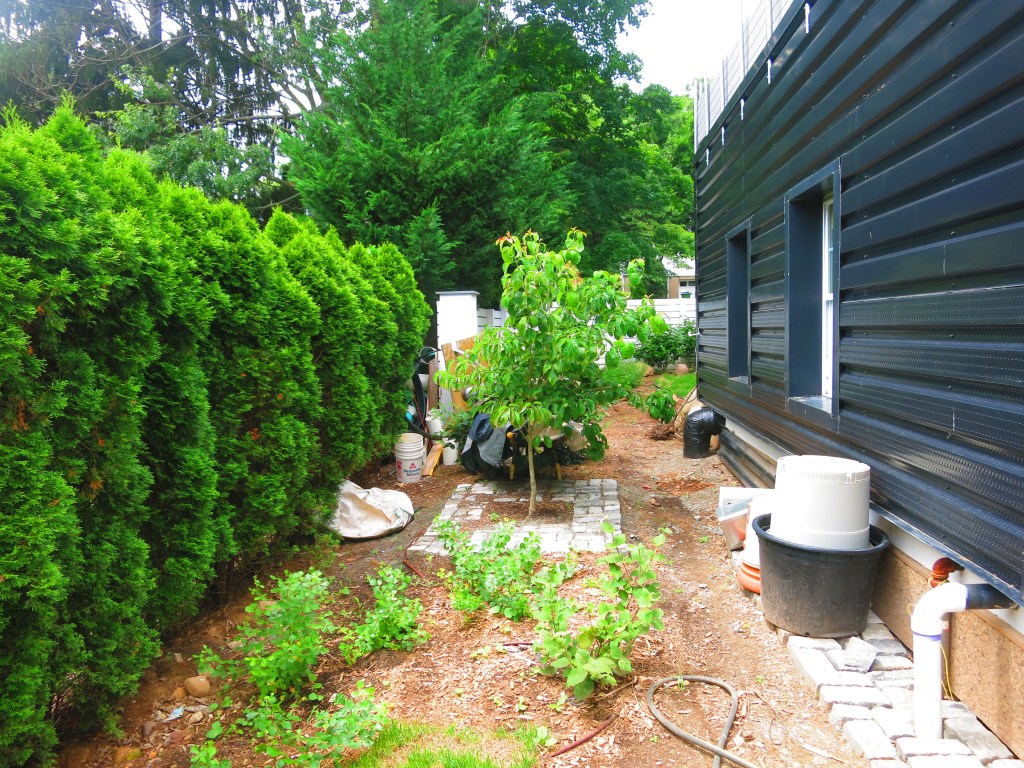 Room is warmed passively by Transpired Solar Air Collectors in Winter to pre-warm air

Passively heated air from the secure room travels through an intake pipe, which then travels through a 200′-long earth tube that is below the frostline, lined with anti-microbial silver ions, and pitched to drain condensation, that comes into the house at the base of the foundation and right up to the energy-recovery ventilator.
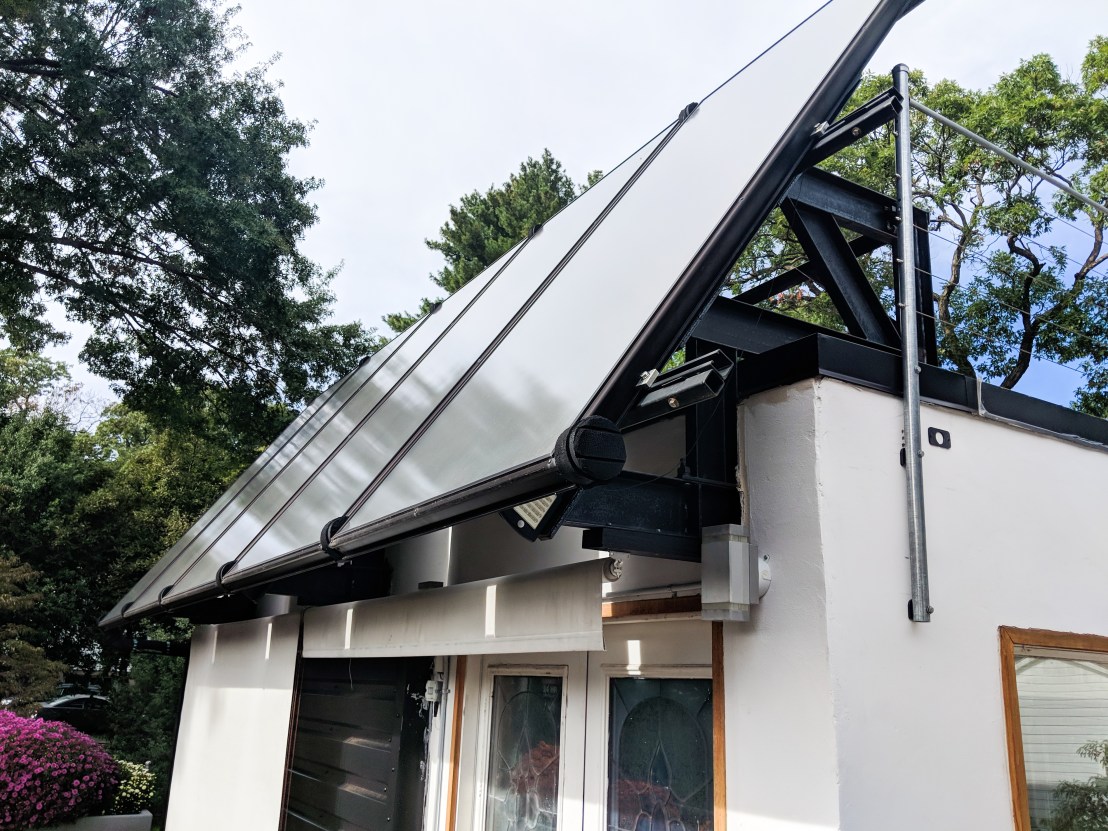
While pre-heating the air with the earth & sun, we simultaneously produce hundreds of gallons of hot water. Even on cloudy days, the solar-thermal system supplements home’s hot water demand using solar drain back system without the use of glycol.
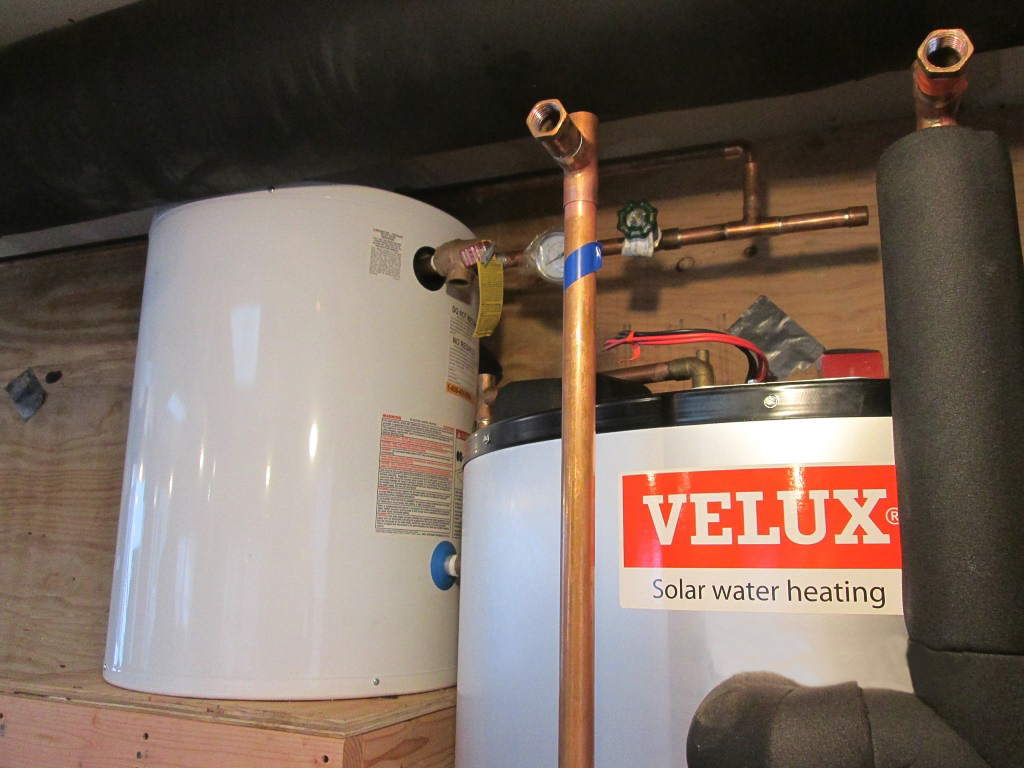
Solar hot water is produced in a glycol-free drainback system. What that means: We use gravity to store the water in insulated tanks before it has a chance to cool down, and therefore we don’t need to use a harmful anti-freeze called glycol. By eliminating glycol, we also increase the thermal-carrying capacity of the water we use.
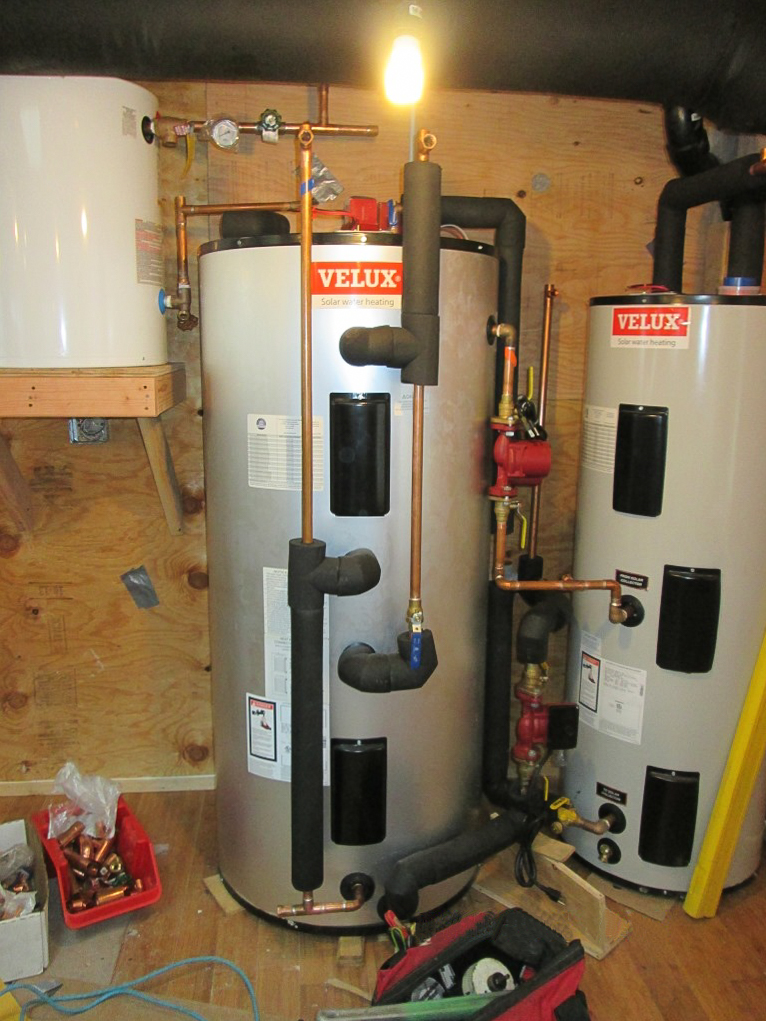
Incidentally, when the hot water tanks cool off over time- they warm up the same room wherein intake air is drawn into the home. This makes sure we use every bit of solar energy we are capturing.
And for when the sun’s warmth just doesn’t meet demand, we have drilled a relatively shallow (inexpensive) geothermal well wherein we sequence 2 heat pumps to kick in as needed. The pumps provide warm and hot water in winter- enough to power the snowmelt system- and chilled water in the summer.
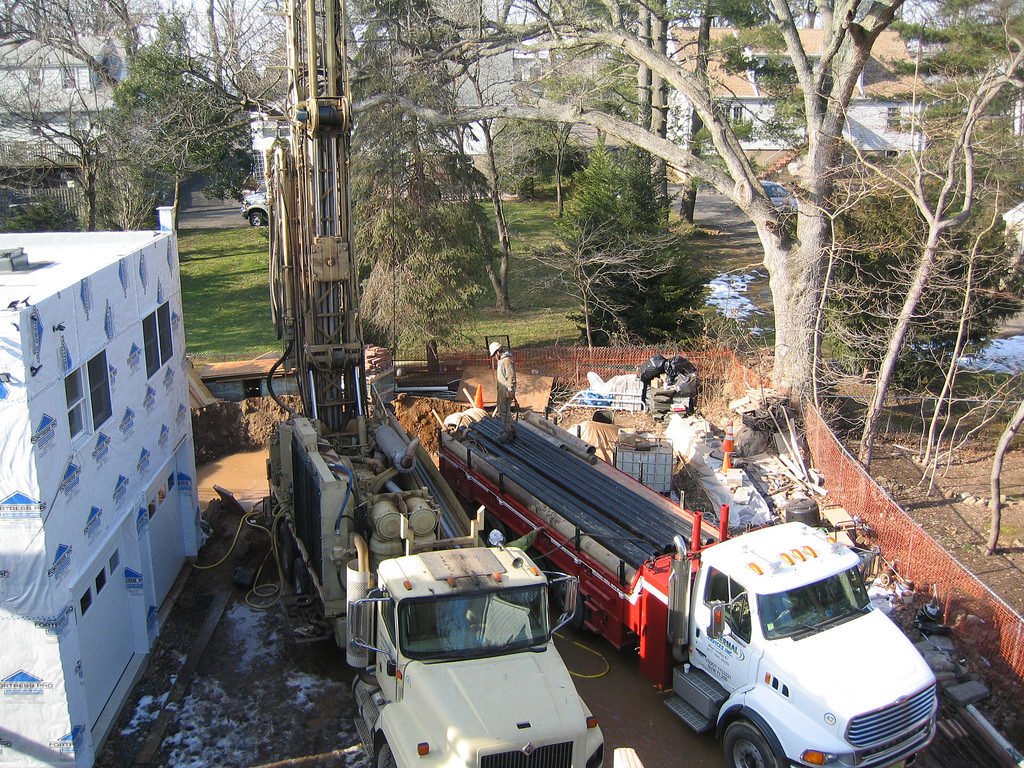
Geothermal drill rig pictured next to well piping truck

Pictured: Drilling rig elevated for stability and slurry water.
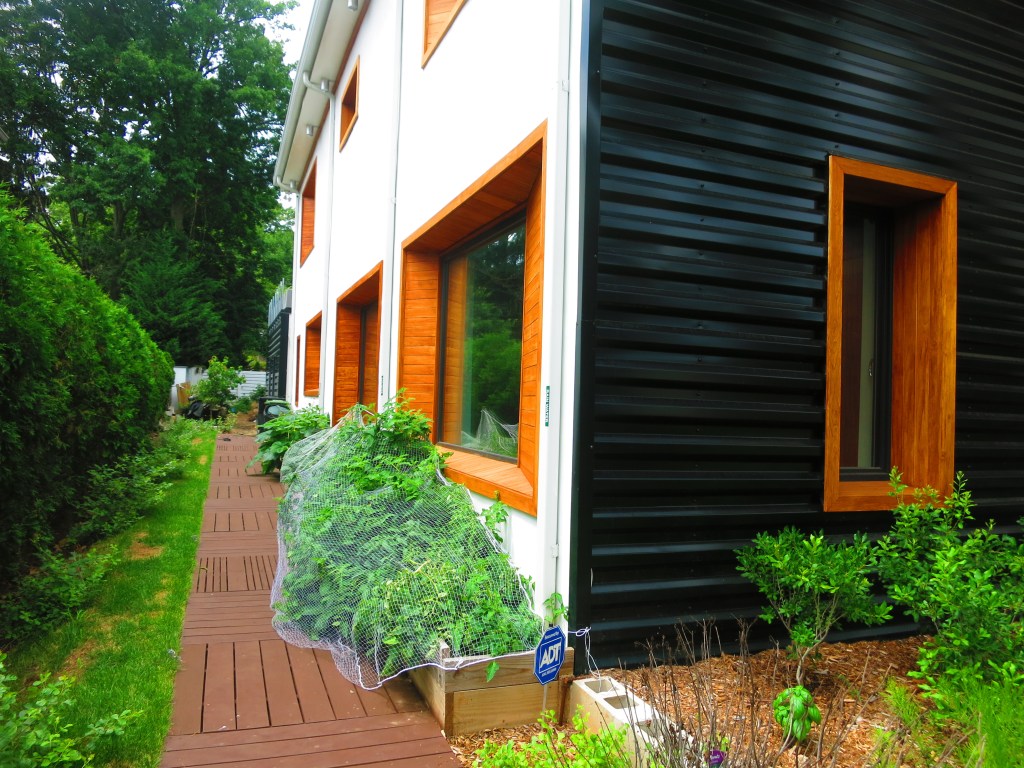
Windows of 53% solar heat gain coefficient- naturally unshaded in Heating season from building positioning + fall of deciduous trees.
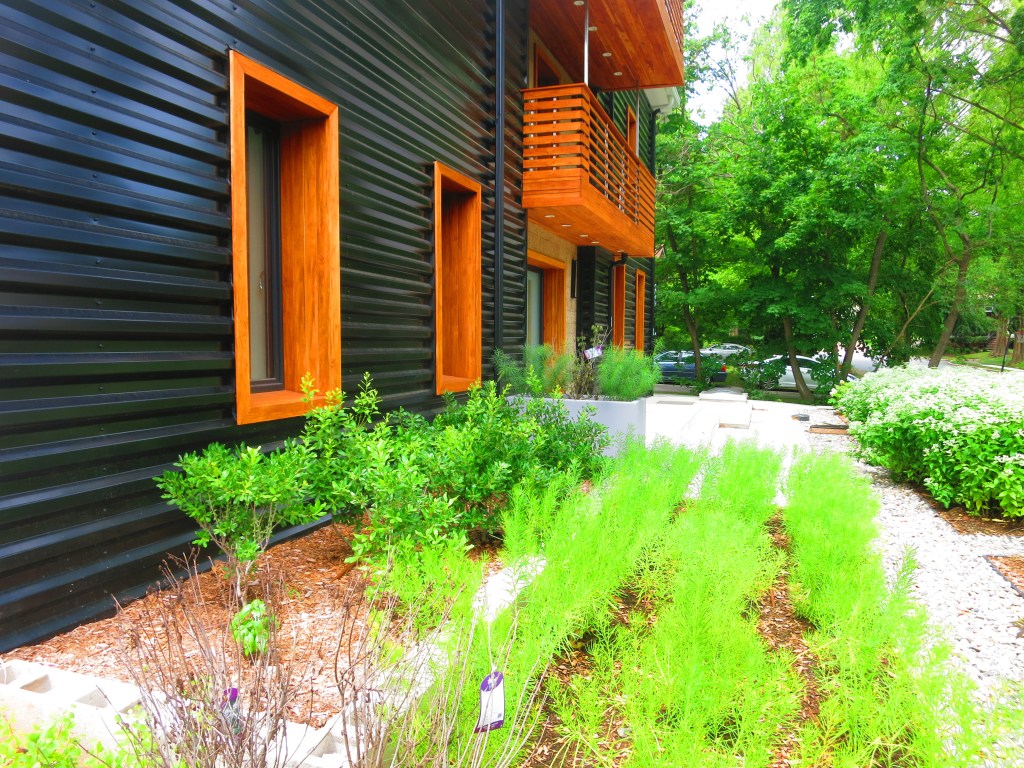
East-facing unshaded black facades exposed during heating season.
Kitchen exhaust heat recovery switches on during Heating season
The systems described above provide enough heat- on the coldest weeks of the year- for space conditioning, DHW, and outdoor snow/ice melt with a standby Lochinvar condensing hot water boiler.
Heat Distribution
Radiation: Low-temp radiant in-floor embedded within 302 tons of concrete


302 Tons of concrete were poured WITHIN the thermal envelope
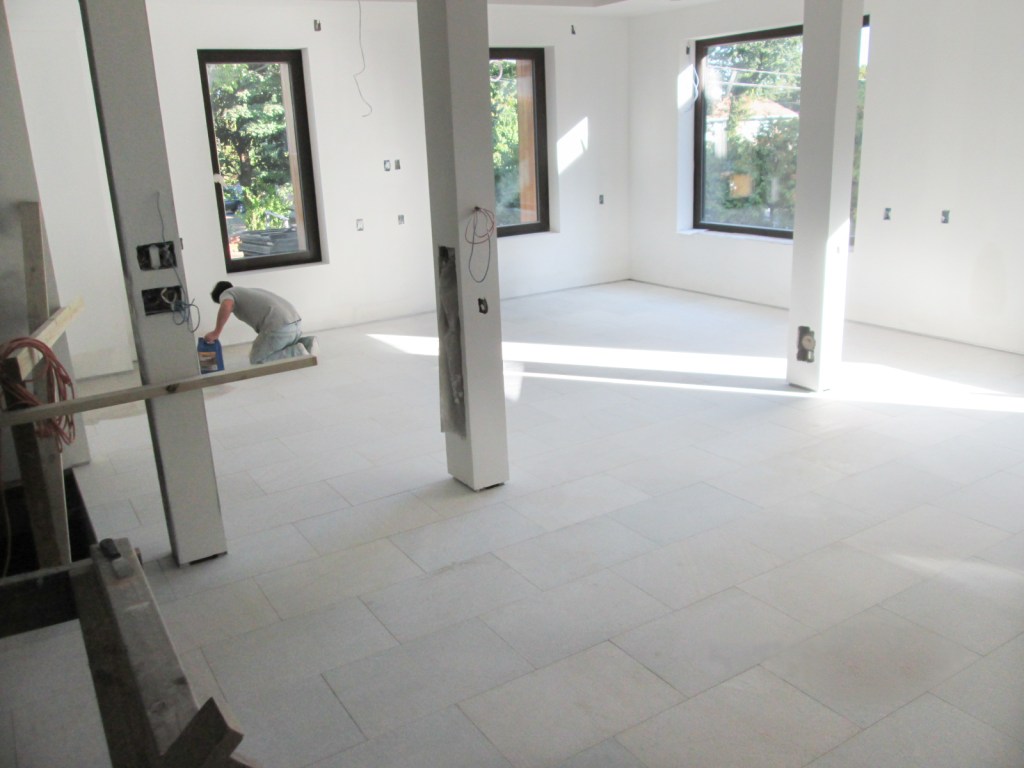
10 tons of quartz stone add tremendous indoor thermal mass- keeping the temperature consistent despite changes in weather.
Convection: To minimize fan energy use, tempered water is brought to in-room fan coil units.
Conduction: Steel structure within thermal envelope and throughout home ensures even temperature.


Snow & Ice melt: Proprietary system developed by Raj and Asit Parikh.
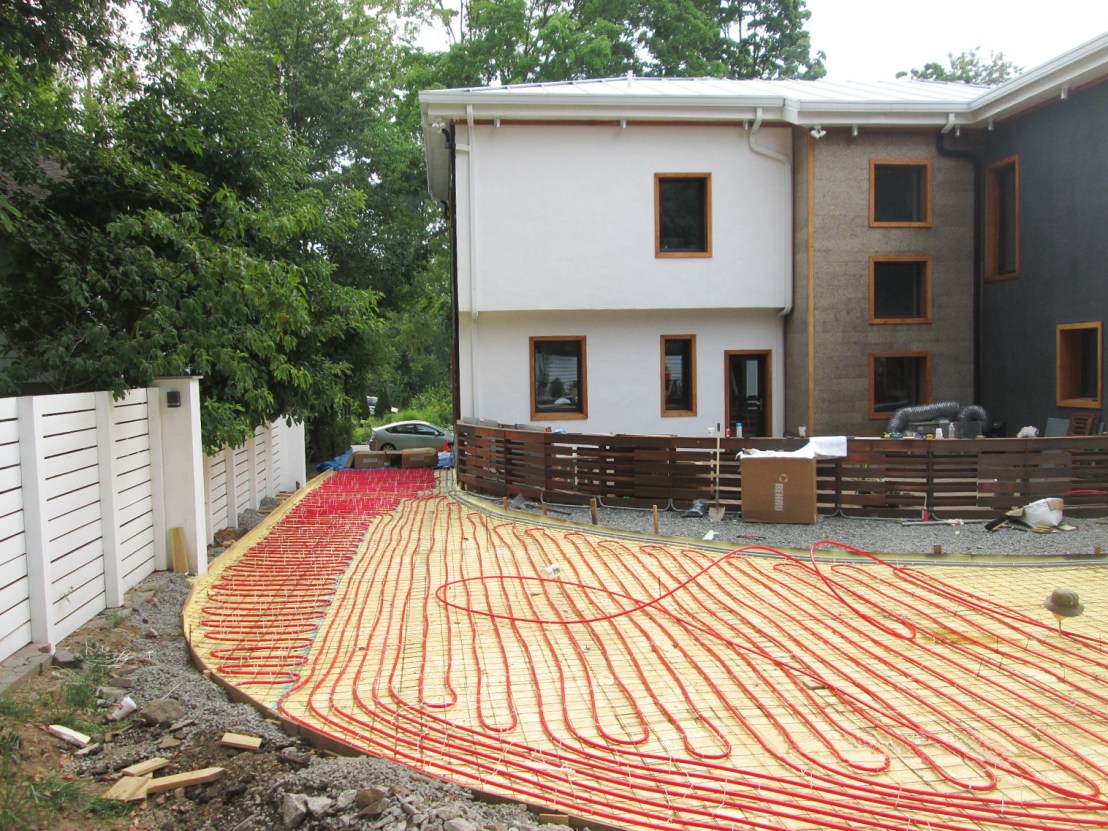
Driveway was built like a passive house: Thermally broken, superinsulated, and with radiant piping within the thermal mass.
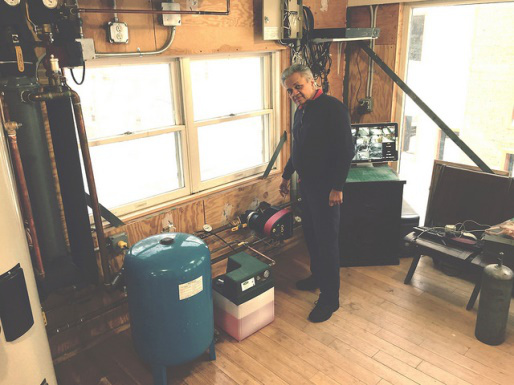
Raj Parikh pictured next to Solar-thermal water storage tanks, expansion tank, and glycol injection pump used in snowmelt supply
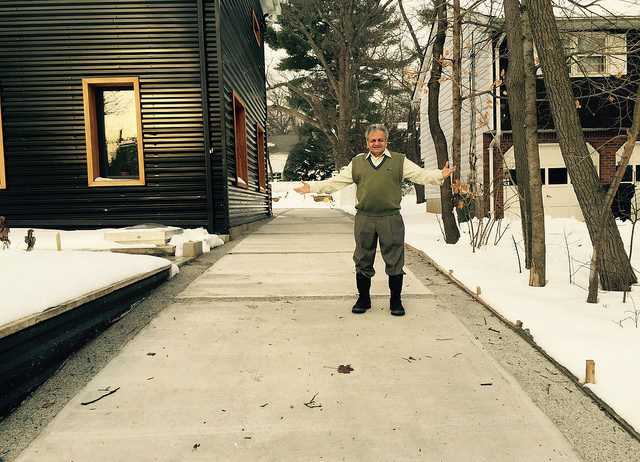
It works!
Cooling Supply
Ground-source heat pumps provide chilled water to fan-coil units located in the home.
Fresh Air intake is pre-tempered by a 200′ earth tube before entering a balanced 93% efficiency Energy Recovery Ventilator
A separate open-loop dehumidifcation system powered by our geothermal system switches on to control indoor relative humidity and eliminate condensation at points of distribution.
Black-colored building elevations and all windows are shaded during cooling season. Windows filter out vast majority of UV and Infrared light.
Cooling Distribution
Radiation: Radiant chilled ceilings in parts of the home & radiant floor in the rest of the home (in dew point controlled environment) benefit from geothermal-produced chilled water. Indoor thermal mass stays cool throughout the day.
Convection: To minimize fan energy use, chilled water is brought to in-room fan coil units for supplemental air conditioning supply.
Conduction: Steel structure within thermal envelope and throughout home ensures even temperature.
 zenesishouse.com